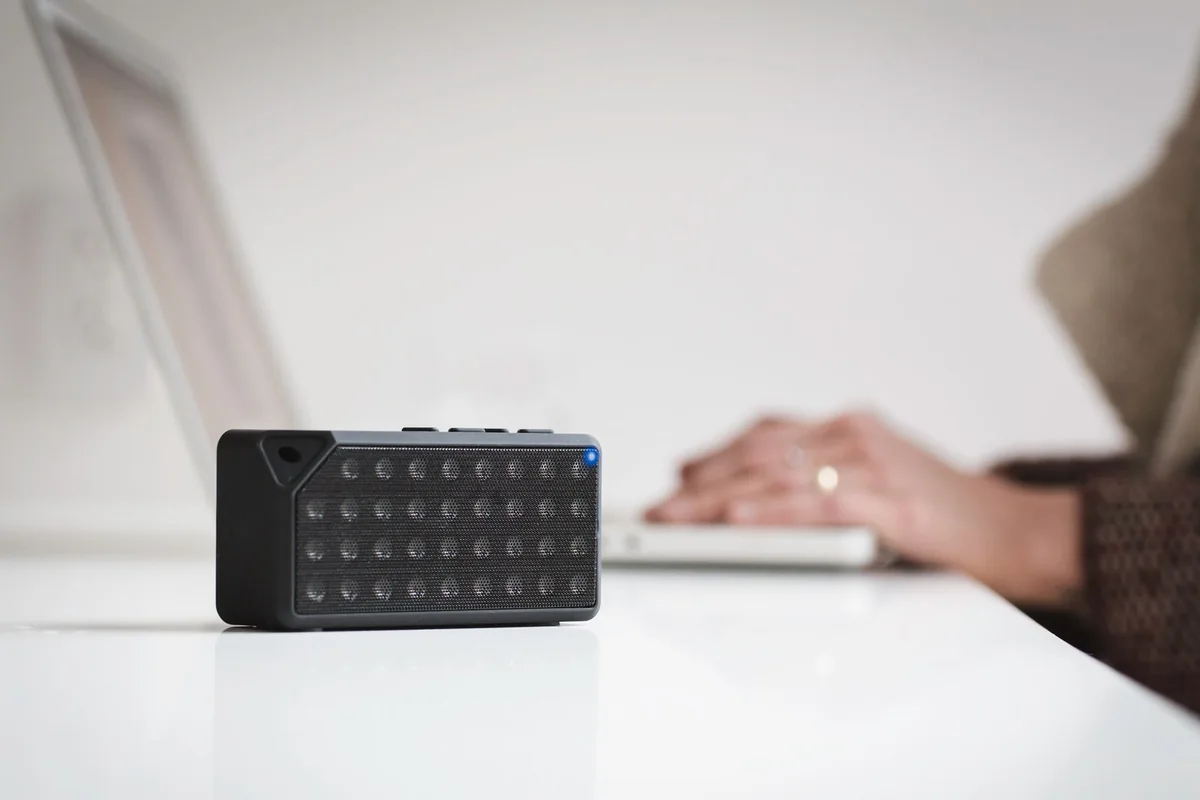
A small room can be an office during the day and a living space at night. You might want background music while cooking, a playlist beside the sofa, or clearer sound at the desk. Those are different listening arrangements, and buying the largest speaker available can create more placement problems than it solves.
Begin with where you listen and how you send music to the speaker. This guide compares useful approaches without publishing invented listening scores. Manufacturer documentation can confirm connections and system requirements; tonal preference and room behavior still need an assessment in your own space.
Choose the connection before the cabinet
Bluetooth can be convenient for sending audio directly from a phone. Wi-Fi systems may support a different daily routine, including network-based playback and integration with other speakers. Check the services you use and whether the product requires an account, app, or particular network setup.
For a desk, a wired connection may be preferable when the computer is the main source. If you need television sound, check actual TV-compatible connections and setup instructions. A speaker that plays music from a phone is not automatically an appropriate replacement for a television soundbar.
Give the speaker a realistic location
Decide on a stable surface with access to power and room for its cables. Shelves, corners, and crowded furniture can influence how a speaker behaves. Follow the manufacturer’s placement guidance instead of assuming an attractive bookshelf photograph shows the ideal acoustic arrangement.
Keep access to controls and consider other occupants. A powerful system can still be used quietly, but spending for output you cannot comfortably use in a shared apartment may not be sensible. If listening happens mainly at your desk, near-field desktop speakers may fit the task better than a room-wide system.
One speaker or a pair?
One speaker can be a tidy starting point for background music. A pair can create a more defined stereo arrangement when you have appropriate positions and sit within a useful listening area. Verify whether the model supports pairing, whether matching generations are required, and how stereo mode affects other uses.
Sonos describes the Era 100’s available connections and setup on its official page. Use that documentation to examine system requirements and accessories, not as evidence that it is the best-sounding choice. Also budget for any adapter that your intended wired source requires rather than comparing incomplete prices.
Count the cost of the ecosystem
A connected speaker may invite future purchases for other rooms. Before committing, check the app, supported services, network needs, and how the system behaves without your preferred subscription. Do not justify the first purchase using expansion plans that may never happen.
Skip a networked system if you want an uncomplicated occasional connection and have no use for its additional capabilities. Skip a portable battery speaker for a permanently powered desk unless its portability will genuinely be used. Conversely, a fixed speaker is awkward if your listening moves frequently between rooms.
Choose by your situation
| Your situation | Useful starting point | Main tradeoff |
|---|---|---|
| Background music in one room | Single speaker with suitable phone connection | Simple placement; limited stereo separation |
| Focused listening at desk | Appropriate stereo pair | More cabling; dedicated listening position |
| Music across several rooms | Compatible networked system | Convenient integration; ecosystem commitment |
Before you place the order
Compare the exact model and configuration, not just the product family. Save the listing and the compatibility documentation so you can check what was promised if something arrives differently. Read the seller’s current return conditions, including packaging requirements, shipping charges, and any exclusions for opened items. A lower price is less useful when it removes your opportunity to assess fit or compatibility.
Keep the first setup simple. Connect the essential device or accessory, confirm it works in your normal application, and then add the rest of your equipment. During the return period, try an ordinary full workday or listening routine rather than only the first few minutes. Keep your previous equipment until the replacement has shown it can handle the job.
Frequently asked questions
Will a bigger speaker always sound better?
No. Suitability depends on placement, volume, room, and preference. We have not measured or ranked the products’ sound.
Can I connect my turntable directly?
Check both devices’ connection requirements, including whether a phono preamplifier or adapter is needed. A familiar-looking socket is not sufficient confirmation.
Sources and shopping information
The following official sources were checked on October 7, 2026. Manufacturer pages can change; confirm current specifications, availability, and the exact regional version before buying. Links labeled manufacturer link lead directly to a brand, without affiliate tracking.